 X (Twitter)
About
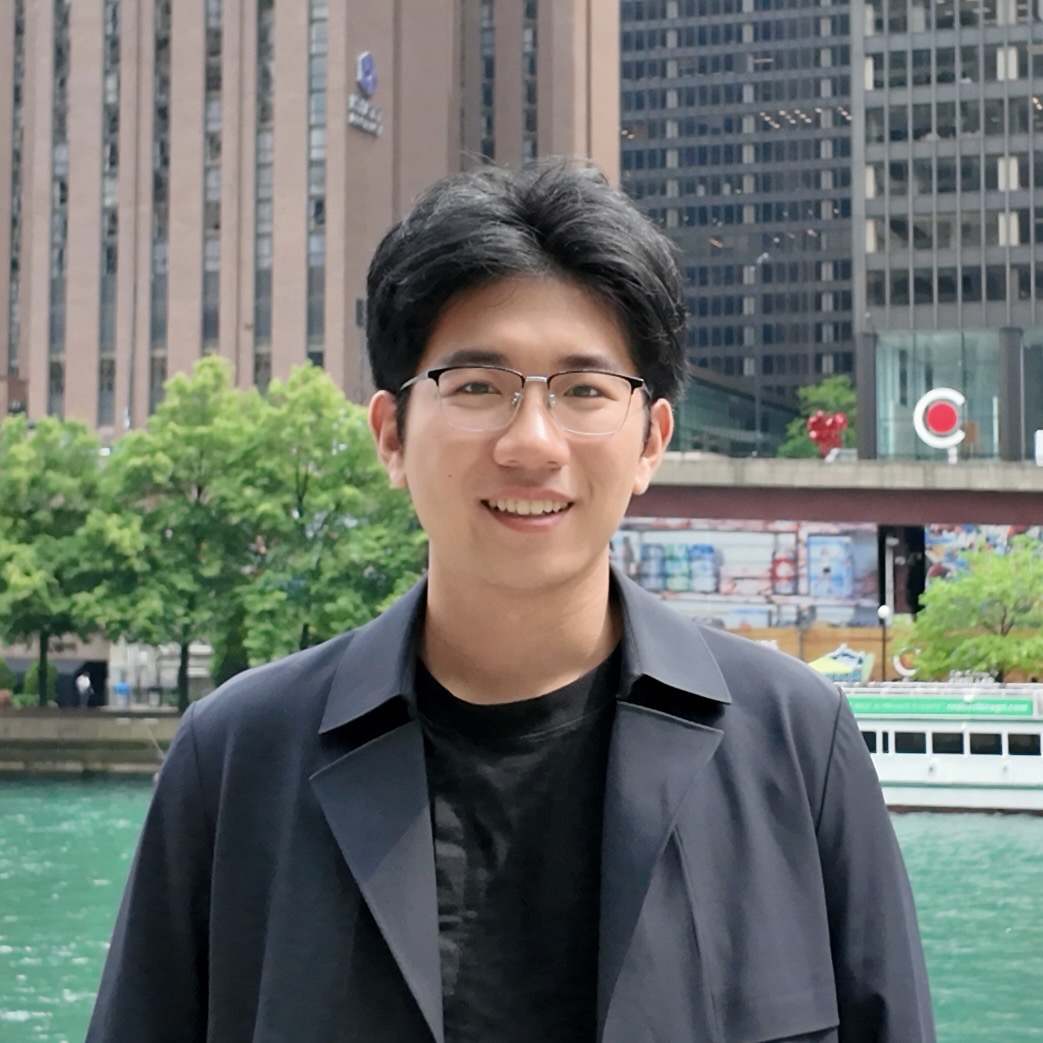
👋 Hi there! I am Yiyan (Harry) Peng, an M.S. student in Computer Engineering at Northwestern University, where I am advised by Prof. Qi Zhu in the IDEAS Lab. I also collaborate with Professors Ruohan Zhang, Manling Li, Huajie Shao, and Minshuo Chen.
Previously, I received my B.Eng. in Electronic Engineering from the Hong Kong University of Science and Technology (HKUST), where I was advised by Prof. Jun Zhang and Dr. Albert Kai-Sun Wong.
🔬 Research Interests
My research interests lie in robot learning and embodied AI, particularly reliable and adaptive manipulation for precision-demanding and long-horizon tasks.
My prior work on specification-grounded safety evaluation highlighted the gap between task success and reliable behavior. Building on this experience, I am interested in:
- Representations and learning methods for robot foundation models that generalize across tasks and environments and adapt through interaction.
- Policy learning and long-horizon decision-making, including the use of predictive world models.
📢 News
- 2026.10: 🎉 GAM accepted to the Pretrain to Adapt workshop at CoRL 2026.
- 2026.09: 🎉 SENTINEL accepted to NeurIPS 2026 E&D as a poster.
- 2026.08: Released ManiGuard.
- 2025.09: Started my M.S. in Computer Engineering at Northwestern University.
- 2025.05: Graduated from HKUST with a B.Eng. in Electronic Engineering.
- 2025.05: Our Final Year Project received the HKUST ECE Best FYP/T Award 2024-2025, 2nd Runner-Up.
📚 Publications
* Equal contribution. † Project lead.
Grounded Action Model: 3D Grounding as a Foundation for Robotics
CoRL 2026 Workshop — Pretrain to Adapt
3D-grounded action learning for robotic manipulation, with object-centric representations and a flexible interface for task specification.
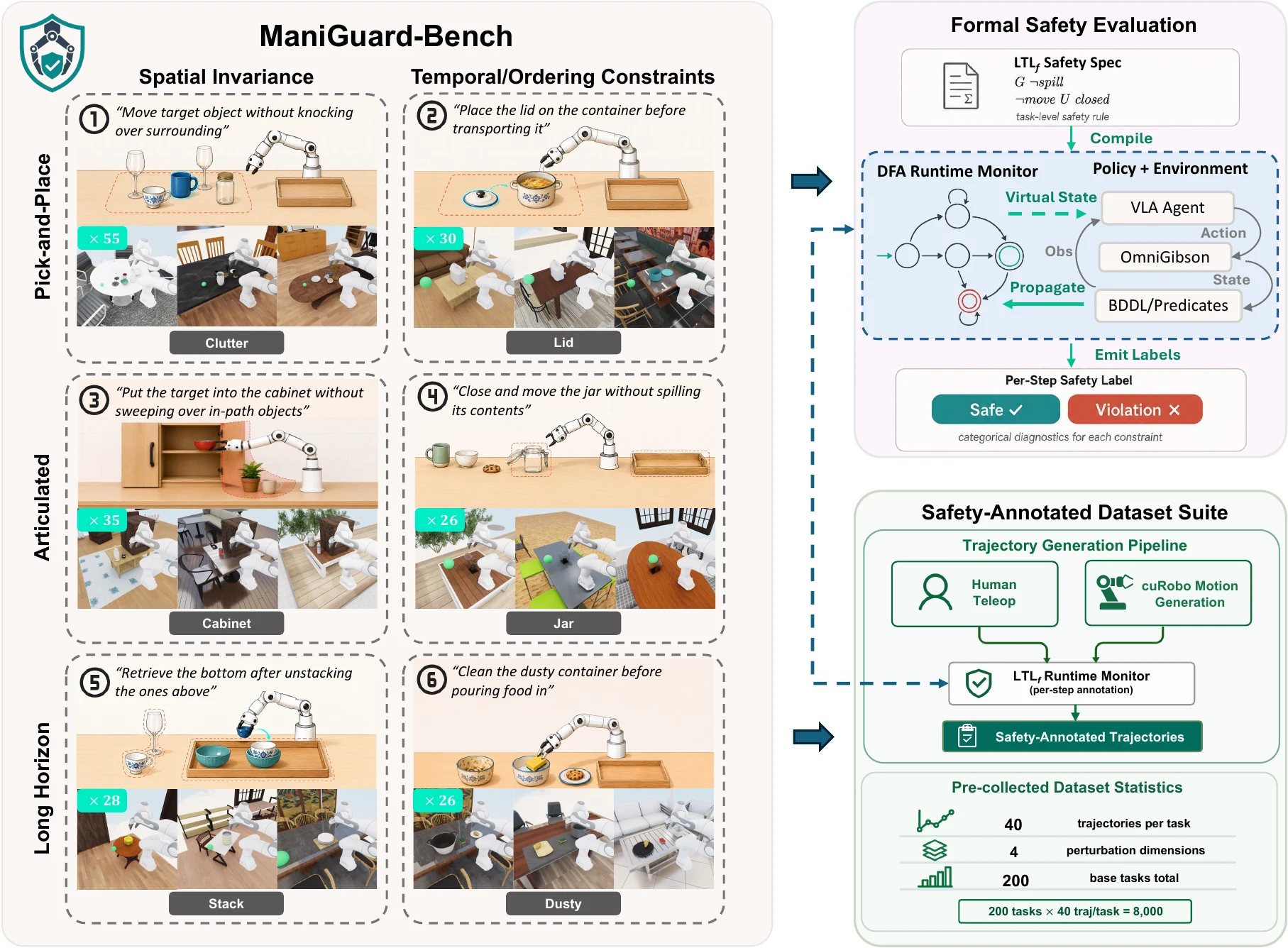
ManiGuard: A Benchmark and Data Suite for Specification-Grounded Safety Evaluation and Improvement of Robotic Manipulation
arXiv preprint, 2026
- A specification-grounded manipulation benchmark with 1,000 evaluation scenarios and 8,000 safety-annotated demonstrations for evaluating and fine-tuning VLA policies.
- Across 23,000+ rollouts, 6–21% of successful executions still violate safety specifications, with evaluation spanning simulation and a real Franka robot.
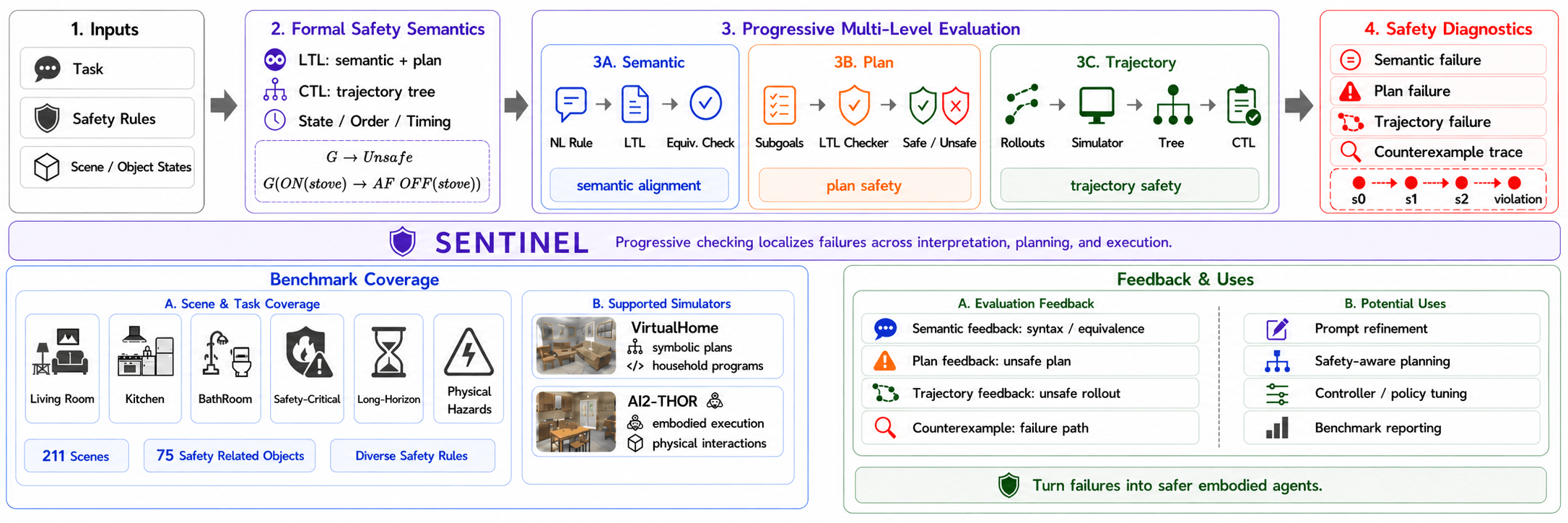
SENTINEL: A Multi-Level Formal Framework for Safety Evaluation of Foundation Model-based Embodied Agents
NeurIPS 2026, Evaluations and Datasets Track (Poster)
- Multi-level safety evaluation for foundation-model embodied agents, using temporal logic to check semantic understanding, action plans, and execution trajectories.
- Localizes safety violations with counterexamples in VirtualHome and AI2-THOR, enabling feedback-driven safety improvement.
💻 Projects
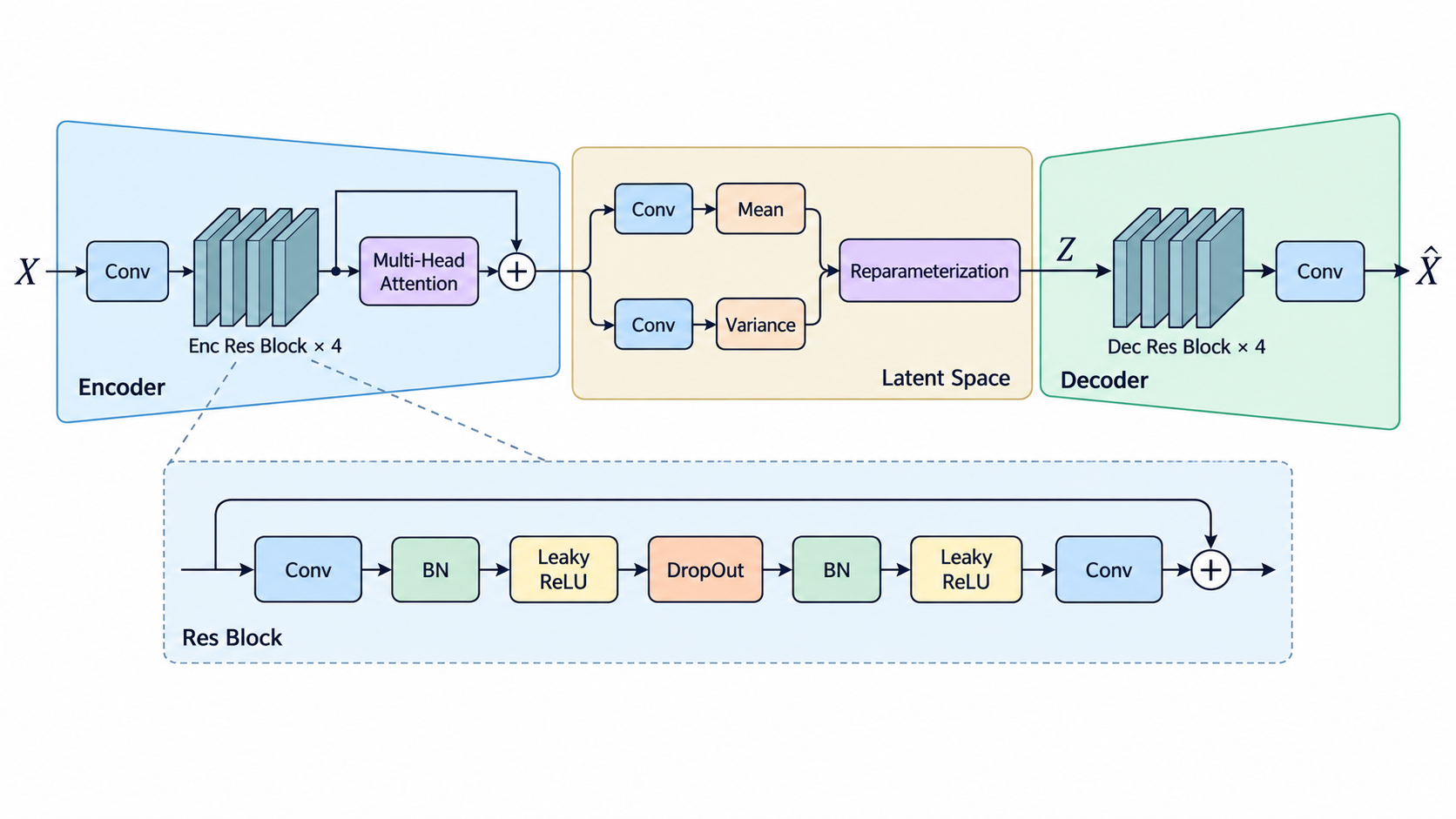
Respiratory Monitoring System
HKUST, ECE Final Year Project (FYP), self-proposed
🏆 HKUST ECE Best FYP/T Award 2024-2025 2nd Runner-Up
Developed MHA-VAE-LSTM for respiratory forecasting and anomaly detection, achieving >95% detection accuracy and ≥10% better reconstruction than VAE-LSTM. Integrated sensors, real-time inference, and ESP-NOW communication into an end-to-end monitoring system with sustained latency below 50 ms.
Vision and Learning for Robotics Manipulation and Grasping
HKUST, ELEC4260, Independent Course Project
Frontier-based Autonomous Exploration for UGV
HKUST, ELEC4260, Independent Course Project
Implemented LiDAR-based SLAM with ICP alignment, A* path planning, Bezier-curve trajectory generation, and PID control to achieve frontier-based autonomous UGV navigation and exploration.
Autonomous Aerial Robotics
HKUST, ELEC5660, Independent Course Project
Implemented real-time trajectory planning for quadrotors, including tuning PID controller, minimum-snap trajectory generation and obstacle-aware path planning (A*, Dijkstra), to achieve smooth and safe autonomous navigation. Developed vision-based localization and state estimation pipelines: applied PnP pose estimation, stereo visual odometry, and fused IMU & vision data via augmented-state EKF, and validated in simulation and real-world flight tests.
Autonomous and Fast Robots
Cornell University, ECE4160/5160, Independent Course Project
Developed and programmed an autonomous driving framework for a fast robot car from scratch, with sensing (multi-sensor fusion), localization (Bayes filter-based localization), environment mapping, control (PID), path planning, and navigation on a microcontroller board (SparkFun RedBoard Artemis Nano).
🎓 Education
M.S. in Computer Engineering
Northwestern University
Sep 2025 - May 2027 (Expected)

B.Eng. in Electronic Engineering
The Hong Kong University of Science and Technology
Sep 2021 - May 2025

Non-Degree Exchange, Electrical and Computer Engineering
Cornell University
Jan 2024 - May 2024
🏆 Honors and Awards
- ECE Best FYP/T Award, 2nd Runner-Up, HKUST
- First Class Honors, HKUST
- Dean’s List, HKUST
- University’s Scholarship Scheme for Continuing Undergraduate Students, HKUST